


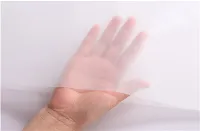


As a supplier of meltblown non woven fabric, I often receive inquiries about the various properties of our products. One question that has been coming up more frequently lately is about the anti - UV properties of meltblown non woven fabric. In this blog post, I'll delve into the details of these properties, exploring what they are, how they work, and why they matter.

Understanding Meltblown Non Woven Fabric
Before we discuss the anti - UV properties, let's first understand what meltblown non woven fabric is. Meltblown non woven fabric is produced through a process where high - velocity air blows a molten thermoplastic resin from an extruder die tip onto a conveyor or take - up screen, forming fine, random - laid fibers. This results in a fabric with a very fine fiber diameter and high surface area, which gives it unique characteristics such as high filtration efficiency, softness, and good barrier properties.
The Basics of Anti - UV Properties
Ultraviolet (UV) radiation from the sun can be divided into three types: UVA, UVB, and UVC. UVC is mostly absorbed by the Earth's atmosphere, but UVA and UVB can reach the Earth's surface and cause damage to materials and living organisms. UVA has a longer wavelength and can penetrate deeper into materials, while UVB has a shorter wavelength and is more likely to cause surface damage.
The anti - UV properties of a material refer to its ability to block or absorb UV radiation. When a fabric has good anti - UV properties, it can protect objects or people covered by it from the harmful effects of UV rays, such as color fading, material degradation, and skin damage.
How Meltblown Non Woven Fabric Blocks UV Radiation
There are several mechanisms by which meltblown non woven fabric can block UV radiation:
Absorption
Some additives can be incorporated into the meltblown non woven fabric during the manufacturing process. These additives, such as organic UV absorbers or inorganic pigments like titanium dioxide and zinc oxide, can absorb UV radiation. When UV rays hit the fabric, the additives convert the UV energy into heat and release it, preventing the UV rays from passing through the fabric.

Reflection
The structure of the meltblown non woven fabric itself can also play a role in reflecting UV radiation. The fine fibers in the fabric create a complex network that scatters and reflects UV rays. The more fibers there are and the more randomly they are arranged, the greater the chance of UV rays being reflected away from the fabric.
Factors Affecting the Anti - UV Properties of Meltblown Non Woven Fabric
Fiber Composition
The type of polymer used in the meltblown non woven fabric can affect its anti - UV properties. For example, polypropylene, which is commonly used in meltblown non woven fabric production, has some natural resistance to UV radiation. However, its performance can be further enhanced by adding UV - resistant additives.
Additive Concentration
The amount of UV - absorbing additives in the fabric is crucial. A higher concentration of additives generally leads to better anti - UV performance. However, there is a limit to how much additive can be added, as too much can affect the fabric's other properties, such as its strength and flexibility.
Fabric Thickness
Thicker meltblown non woven fabrics tend to have better anti - UV properties. This is because there are more fibers and additives in a thicker fabric, providing more opportunities to absorb and reflect UV radiation.
Applications of Meltblown Non Woven Fabric with Anti - UV Properties
Outdoor Protective Products
Meltblown non woven fabric with good anti - UV properties can be used to make outdoor protective products such as sunshades, tents, and outdoor furniture covers. These products can effectively block UV rays, protecting people and objects from the sun's harmful effects.
Agricultural Covers
In agriculture, anti - UV meltblown non woven fabric can be used as crop covers. It can protect crops from excessive UV radiation, which may otherwise cause damage to the plants and reduce their yield.
Medical and Hygiene Products
Some medical and hygiene products may also benefit from the anti - UV properties of meltblown non woven fabric. For example, Non Woven Fabric for Medical Wrap can be made with anti - UV features to protect the contents from UV - induced degradation.
Our Product Offerings
At our company, we offer a range of meltblown non woven fabrics with excellent anti - UV properties. Our White Meltblown Non Woven Fabric is a popular choice among customers. It is made with high - quality polypropylene and carefully selected UV - resistant additives to ensure maximum protection against UV radiation.
In addition to our standard products, we also offer customized solutions. We can adjust the fiber composition, additive concentration, and fabric thickness according to your specific requirements. Whether you need a fabric for outdoor applications or medical use, we can provide a product that meets your needs.
Comparing Our Anti - UV Meltblown Non Woven Fabric with Others
When compared to other types of fabrics, our meltblown non woven fabric has several advantages in terms of anti - UV properties. Firstly, its fine fiber structure provides a large surface area for UV absorption and reflection. Secondly, the ability to incorporate additives allows us to precisely control the anti - UV performance of the fabric.
Compared to traditional woven fabrics, our meltblown non woven fabric is lighter and more flexible, making it easier to use in various applications. It also has better breathability, which is important in many outdoor and medical applications.
The Future of Anti - UV Meltblown Non Woven Fabric
As the awareness of the harmful effects of UV radiation increases, the demand for anti - UV products is expected to grow. In the future, we anticipate that there will be more research and development in the field of anti - UV meltblown non woven fabric. This may include the development of new additives with higher UV - absorption efficiency and the improvement of the manufacturing process to produce fabrics with even better anti - UV properties.
Contact Us for Procurement
If you are interested in our meltblown non woven fabric with anti - UV properties, or if you have any questions about our products, please feel free to contact us. We are more than happy to discuss your requirements and provide you with a detailed quotation. Our team of experts can also offer technical support and advice to help you choose the most suitable product for your application. Whether you need a small quantity for a trial or a large - scale order for your business, we can meet your needs.
In addition to our anti - UV meltblown non woven fabric, we also offer SMS Disposable Bed Sheet Cloth, which is another high - quality non woven product in our portfolio.
References
- "Nonwoven Fabrics: Structure, Properties, and Applications" by Subhash Anand and Seeram Ramakrishna
- "Ultraviolet Radiation and its Effects on Polymers" in the Journal of Polymer Science
- Research papers on the development of UV - resistant additives for non woven fabrics from various academic sources.