


As a supplier of Blue PE Laminated Viscose, I often receive inquiries about its various properties, and one of the most frequently asked questions is about its thickness. In this blog post, I'll delve into the details of the thickness of Blue PE Laminated Viscose, exploring its significance, influencing factors, and typical ranges.
The Significance of Thickness
The thickness of Blue PE Laminated Viscose plays a crucial role in determining its performance and suitability for different applications. A thicker material generally offers greater strength and durability. For instance, in applications where the material needs to withstand mechanical stress or abrasion, a thicker Blue PE Laminated Viscose would be more appropriate. It can resist tearing and puncturing, ensuring a longer service life.
On the other hand, thickness also affects the material's flexibility. Thinner Blue PE Laminated Viscose tends to be more flexible, making it ideal for applications that require bending or conforming to irregular shapes. This is particularly important in industries such as packaging, where the material needs to wrap around products neatly.
In addition, the thickness can impact the material's barrier properties. A thicker layer of Blue PE Laminated Viscose may provide better protection against moisture, gases, and other contaminants. This is essential in applications where product integrity needs to be maintained, such as in the medical and food industries.
Factors Influencing the Thickness
Several factors can influence the thickness of Blue PE Laminated Viscose. One of the primary factors is the manufacturing process. Different manufacturing techniques can result in varying thicknesses. For example, extrusion coating is a common method used to produce Blue PE Laminated Viscose. The speed of the extrusion process, the temperature, and the pressure can all affect the final thickness of the material.
The raw materials used also play a significant role. The quality and properties of the polyethylene (PE) and viscose layers can influence the overall thickness. For instance, if a higher - density PE is used, the resulting Blue PE Laminated Viscose may be thicker. Similarly, the type and quality of viscose can also impact the thickness.
The intended application of the material is another important factor. Manufacturers often adjust the thickness based on the specific requirements of the end - use. For example, if the material is going to be used for heavy - duty packaging, a thicker Blue PE Laminated Viscose will be produced. Conversely, for lightweight applications, a thinner material may be preferred.
Typical Thickness Ranges
The thickness of Blue PE Laminated Viscose can vary widely depending on the factors mentioned above. Generally, the thickness can range from as thin as 0.02 mm to as thick as 0.5 mm.
For applications such as disposable medical gowns and masks, thinner Blue PE Laminated Viscose in the range of 0.02 - 0.1 mm is commonly used. These thin materials provide the necessary barrier properties while maintaining flexibility and comfort for the wearer. You can find more information about PE Laminated Non Woven Fabric For Medical on our website.
In the packaging industry, the thickness can vary depending on the type of product being packaged. For lightweight consumer goods, a thickness of 0.1 - 0.2 mm may be sufficient. However, for heavier or more delicate items, a thicker material in the range of 0.2 - 0.5 mm may be required.
For industrial applications where the material needs to withstand harsh environments and mechanical stress, a thicker Blue PE Laminated Viscose is often used. Thicknesses in the range of 0.3 - 0.5 mm are common in these scenarios.
Measuring the Thickness
Accurately measuring the thickness of Blue PE Laminated Viscose is essential to ensure product quality and meet customer requirements. There are several methods available for measuring thickness.
One of the most common methods is the use of a micrometer. A micrometer is a precision instrument that can measure the thickness of the material with high accuracy. It works by applying a small amount of pressure to the material and measuring the distance between two surfaces.
Another method is the use of non - contact thickness gauges. These gauges use technologies such as ultrasonic or laser to measure the thickness without physically touching the material. This is particularly useful for measuring the thickness of delicate or soft materials.
Comparing with Other Laminated Materials
When comparing Blue PE Laminated Viscose with other laminated materials, its thickness characteristics can provide some unique advantages. For example, compared to Three - Layer Laminated Hydrophilic PP+PE+PP, Blue PE Laminated Viscose may offer better flexibility due to the viscose layer. The viscose provides a soft and drapable quality that can be beneficial in certain applications.

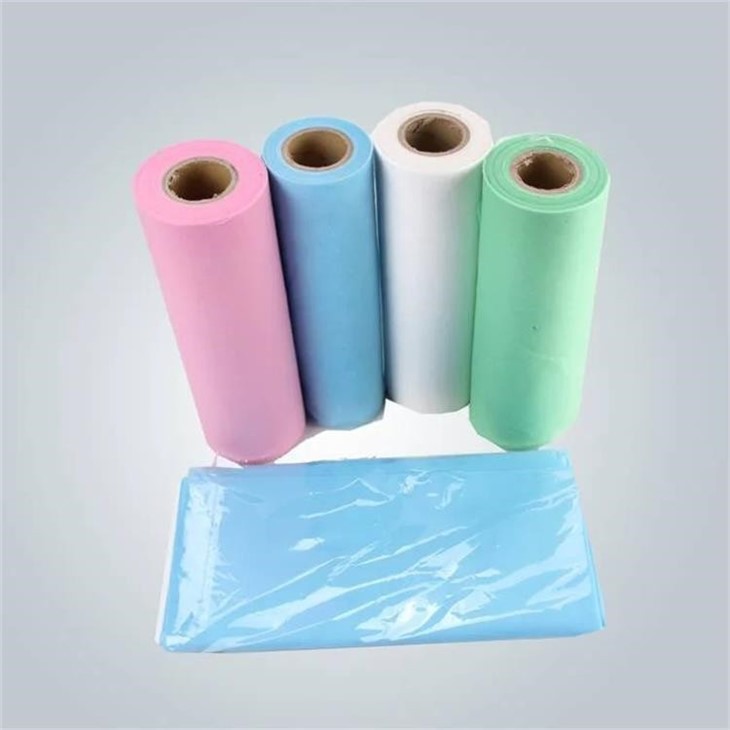
In terms of barrier properties, Blue PE Laminated Viscose can be comparable to other laminated materials. However, the choice of thickness can significantly impact these properties. A well - selected thickness of Blue PE Laminated Viscose can provide excellent protection against moisture and contaminants, similar to other high - performance laminated materials.
Applications Based on Thickness
As mentioned earlier, different thicknesses of Blue PE Laminated Viscose are suitable for various applications. In the medical field, thin Blue PE Laminated Viscose is used for disposable medical products such as surgical drapes, gowns, and masks. The thin material allows for easy movement and comfort for the medical staff while providing a reliable barrier against bacteria and viruses.
In the packaging industry, thicker Blue PE Laminated Viscose is used for heavy - duty packaging of products such as electronics, machinery parts, and industrial equipment. The thicker material provides the necessary strength and protection to prevent damage during transportation and storage.
In the automotive industry, Blue PE Laminated Viscose can be used for interior components. The flexibility of thinner materials makes them suitable for lining seats and door panels, while thicker materials can be used for insulation and soundproofing.
Quality Control and Thickness
Maintaining consistent thickness is crucial for ensuring the quality of Blue PE Laminated Viscose. During the manufacturing process, strict quality control measures are implemented to monitor and adjust the thickness. This includes regular inspections using the measurement methods mentioned above.
Any deviation from the specified thickness can lead to product defects. For example, if the material is too thin, it may not provide the required strength or barrier properties. On the other hand, if it is too thick, it may be less flexible and more expensive to produce.
Future Trends in Thickness
As technology advances, there are several trends emerging in the thickness of Blue PE Laminated Viscose. One trend is the development of thinner materials with enhanced properties. Manufacturers are constantly looking for ways to reduce the thickness of the material while maintaining or improving its strength, flexibility, and barrier properties. This is driven by the demand for more sustainable and cost - effective solutions.
Another trend is the customization of thickness based on specific customer requirements. With the increasing demand for personalized products, manufacturers are able to produce Blue PE Laminated Viscose with precise thicknesses to meet the unique needs of different industries and applications. You can learn more about non woven fabric lamination and its various applications on our website.
Conclusion
In conclusion, the thickness of Blue PE Laminated Viscose is a critical factor that affects its performance, suitability for different applications, and overall quality. Understanding the significance of thickness, the factors influencing it, and the typical ranges can help customers make informed decisions when choosing the right material for their needs.
As a supplier of Blue PE Laminated Viscose, we are committed to providing high - quality products with consistent thickness. Whether you need thin materials for medical applications or thick materials for industrial packaging, we can offer customized solutions to meet your requirements. If you are interested in purchasing Blue PE Laminated Viscose or have any questions about its thickness or other properties, please feel free to contact us for further discussion and negotiation.
References
- Textile Industry Handbook: Laminated Materials
- Journal of Packaging Science and Technology
- Medical Materials Research Journal