


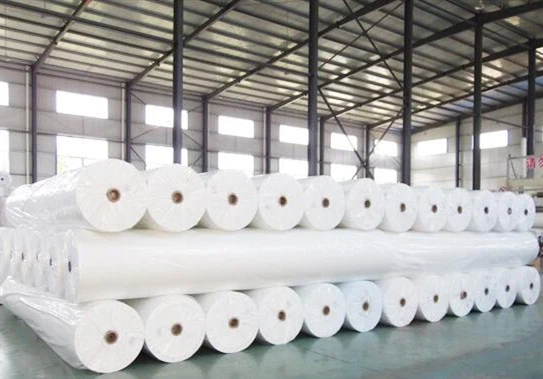
The application of non-woven fabric in interior decoration continues to expand, becoming an important raw material for home and commercial decoration products such as wall coverings, wallpaper substrates, and floor underlayment, and is widely favored by the market.
It is understood that using non-woven wallpaper to decorate walls has a series of undeniable advantages. Let's take a look:
1.Environmentally friendly and safe, with low content of harmful substances.Non-woven fabrics are mostly made of plant fibers and polyester fibers, requiring no traditional weaving process, resulting in outstanding environmental properties. Most products have low formaldehyde content and minimal odor, making them highly safe for human use.
2.Porous and breathable, reducing the risk of mold growth on walls.The disordered interweaving of fibers forms numerous micropores, earning it the title of "breathable decorative substrate." Moisture from the wall can dissipate outwards, effectively reducing common problems such as mold, bulging, and curling edges on wallpaper, making it more suitable for use in humid environments.
3.Stable physical properties, durable and resistant to deformation.Non-woven fabrics are strong and tear-resistant, with small shrinkage and
deformation under temperature and humidity changes. After installation, the seams are smooth, and its light weight does not place an extra burden on the building's walls.
4.Simple construction and easy replacement later.Non-woven fabrics absorb adhesive evenly, resulting in higher work efficiency. During later renovations and removal, most can be peeled off entirely, not easy to damage to the wall surface and reducing renovation and repair costs.
5.Versatile functionality to meet diverse design needs.This substrate is highly malleable, allowing for printing and embossing to create various textures. It also possesses certain sound absorption and noise reduction properties. After modification, it can achieve flame retardant and moisture-proof functions, meeting the needs of both residential and commercial applications such as hotels and office buildings.
Industry experts also remind consumers that ordinary non-woven decorative materials are less washable than PVC products, and high-end non-woven products are relatively expensive. Consumers should choose according to their actual needs and application scenarios.