


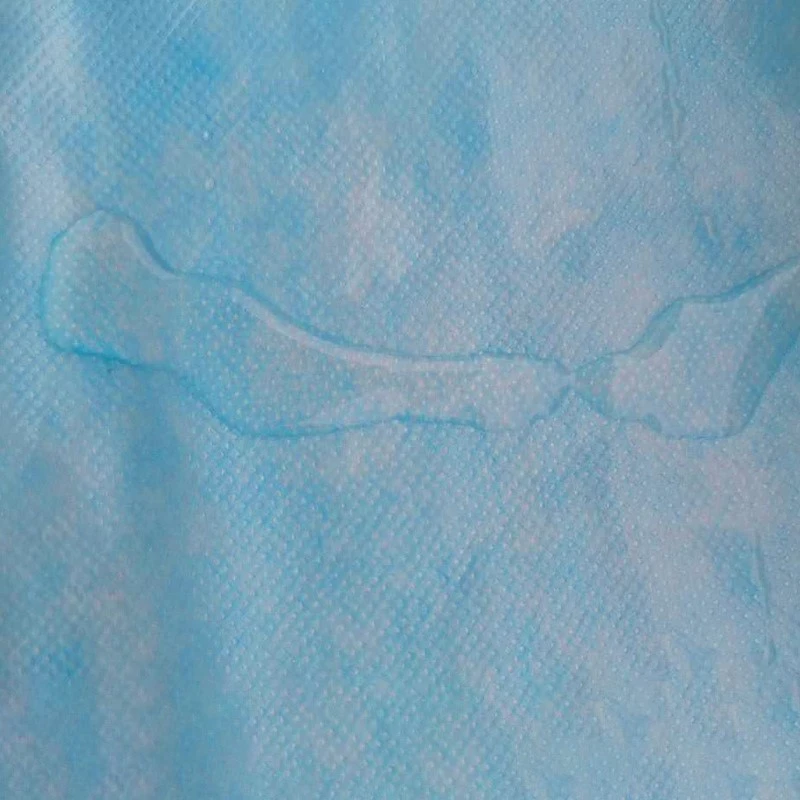
When producing disposable protective clothing, manufacturers need materials that can provide liquid resistance, mechanical strength and comfortable processing. Regular PP spunbond offers good strength and flexibility, but its porous structure may not provide sufficient protection against liquid penetration.
This is why many protective clothing manufacturers consider PE laminated PP nonwoven for applications requiring an additional liquid barrier.
What Makes PE Laminated PP Nonwoven Different?
PE laminated PP nonwoven combines a PP spunbond nonwoven substrate with a polyethylene (PE) film layer.
The PP spunbond provides tensile strength, flexibility and fabric support, while the PE film creates a continuous barrier that can reduce the penetration of water and other liquids.
This composite structure allows manufacturers to achieve a balance between fabric performance and liquid protection.
Why Is It Suitable for Protective Clothing?
One of the main advantages is its liquid barrier performance.
For protective coveralls, isolation gowns and other disposable protective products, reducing liquid penetration can be an important requirement. The PE film layer can provide additional protection compared with standard unlaminated PP spunbond.
At the same time, the PP nonwoven backing makes the material easier to handle and convert into garments.
Depending on the film and lamination structure, manufacturers can also select different levels of flexibility, strength, breathability and barrier performance for specific applications.
What Protective Clothing Can Use PE Laminated Nonwoven?
PE laminated PP nonwoven can be considered for:
* Disposable protective coveralls
* Liquid-resistant protective gowns
* Isolation gowns
* Medical protective clothing
* Shoe covers
* Sleeve covers
* Industrial protective garments
For applications involving water, body fluids or other liquids, the laminated structure can provide an additional barrier layer.