


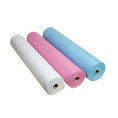


As a seasoned supplier of Pet Non Woven Fabric, I understand the significance of proper storage in maintaining the quality and performance of this versatile material. In this blog, I'll share some expert tips on how to store Pet Non Woven Fabric properly, ensuring its longevity and effectiveness for your various applications.
Understanding Pet Non Woven Fabric
Before delving into storage methods, it's essential to understand what Pet Non Woven Fabric is and its unique properties. Pet Non Woven Fabric is made from polyethylene terephthalate (PET), a synthetic polymer known for its strength, durability, and resistance to moisture and chemicals. This fabric is widely used in various industries, including flooring, filtration, and farming, due to its excellent physical and chemical properties.
There are different types of Pet Non Woven Fabric designed for specific applications. For instance, Pet Nonwoven for Floor Leather is engineered to provide a smooth and durable surface for flooring applications, while Pet Nonwoven for Filtration is optimized for efficient particle capture and fluid filtration. Pet Nonwoven for Farming Bagging is designed to protect agricultural products during storage and transportation.
Factors Affecting Pet Non Woven Fabric Storage
Several factors can affect the quality and performance of Pet Non Woven Fabric during storage. These include:
Temperature
Extreme temperatures can cause the fabric to expand or contract, leading to dimensional changes and potential damage. High temperatures can also accelerate the degradation of the fabric's chemical structure, reducing its strength and durability. It's recommended to store Pet Non Woven Fabric in a temperature-controlled environment, ideally between 20°C and 25°C (68°F and 77°F).
Humidity
Moisture can cause the fabric to absorb water, leading to mold growth, mildew, and degradation of the fabric's physical properties. High humidity levels can also cause the fabric to become stiff and brittle, reducing its flexibility and tear resistance. It's important to store Pet Non Woven Fabric in a dry environment with a relative humidity of less than 60%.
Light
Exposure to direct sunlight or ultraviolet (UV) radiation can cause the fabric to fade, discolor, and degrade over time. UV radiation can break down the fabric's chemical bonds, reducing its strength and durability. It's advisable to store Pet Non Woven Fabric in a dark or shaded area, away from direct sunlight.
Chemicals
Contact with chemicals, such as solvents, acids, and alkalis, can cause the fabric to dissolve, corrode, or change its physical properties. It's important to store Pet Non Woven Fabric away from chemicals and other potentially harmful substances.
Mechanical Stress
Excessive handling, folding, or compression can cause the fabric to develop creases, wrinkles, and permanent deformation. It's important to handle Pet Non Woven Fabric with care and avoid applying excessive stress during storage and transportation.
Proper Storage Methods for Pet Non Woven Fabric
Based on the factors mentioned above, here are some proper storage methods for Pet Non Woven Fabric:
Choose the Right Storage Location
Select a storage location that is clean, dry, and well-ventilated. The storage area should be free from dust, dirt, and other contaminants that can affect the quality of the fabric. It's also important to choose a location that is protected from direct sunlight, extreme temperatures, and humidity.
Use Appropriate Packaging
Pet Non Woven Fabric should be packaged in a protective material, such as plastic bags, cardboard boxes, or shrink wrap, to prevent damage during storage and transportation. The packaging should be sealed tightly to prevent moisture, dust, and other contaminants from entering.
Store in a Horizontal Position
To prevent creasing and deformation, Pet Non Woven Fabric should be stored in a horizontal position. Avoid stacking heavy objects on top of the fabric, as this can cause compression and damage.
Rotate Stock Regularly
To ensure the freshness and quality of Pet Non Woven Fabric, it's important to rotate the stock regularly. Use the first-in, first-out (FIFO) method to ensure that the oldest stock is used first.
Monitor Storage Conditions
Regularly monitor the storage conditions, including temperature, humidity, and light, to ensure that they are within the recommended range. Use a hygrometer and thermometer to measure the temperature and humidity levels in the storage area. If the storage conditions are not within the recommended range, take appropriate measures to adjust them.
Additional Tips for Pet Non Woven Fabric Storage
Here are some additional tips to help you store Pet Non Woven Fabric properly:
Keep the Storage Area Clean
Regularly clean the storage area to remove dust, dirt, and other contaminants. Use a vacuum cleaner or a damp cloth to clean the shelves, floors, and walls of the storage area.
Inspect the Fabric Regularly
Inspect the Pet Non Woven Fabric regularly for signs of damage, such as tears, holes, or discoloration. If any damage is detected, take appropriate measures to repair or replace the fabric.
Train Employees on Proper Storage Procedures
Provide training to employees on the proper storage procedures for Pet Non Woven Fabric. Make sure that they understand the importance of proper storage and are familiar with the recommended storage methods.
Maintain a Record of Storage Conditions
Keep a record of the storage conditions, including temperature, humidity, and light, to track any changes over time. This can help you identify any potential issues and take appropriate measures to address them.


Conclusion
Proper storage of Pet Non Woven Fabric is essential to maintain its quality and performance. By understanding the factors that affect the storage of this fabric and following the proper storage methods and tips outlined in this blog, you can ensure that your Pet Non Woven Fabric remains in excellent condition for an extended period.
If you're interested in purchasing high-quality Pet Non Woven Fabric for your specific applications, please feel free to contact us for more information and to discuss your requirements. We're committed to providing our customers with the best products and services, and we look forward to working with you.
References
- "Nonwoven Fabrics: Structure, Properties, and Applications" by David J. Kotek
- "Textile Science" by Robert M. Berberich
- "Polymer Science and Technology" by Charles A. Daniels