


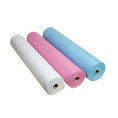


As a supplier of SMS non woven fabric, I've witnessed firsthand the remarkable evolution of this versatile material. SMS non woven fabric, composed of Spunbond - Meltblown - Spunbond layers, has found its way into a wide range of industries due to its unique properties such as high strength, good barrier performance, and excellent breathability. In this blog, I'll delve into the future development trends of SMS non woven fabric, exploring how it's likely to shape various sectors in the coming years.
1. Healthcare and Hygiene Industry
The healthcare and hygiene sector has been one of the major consumers of SMS non woven fabric. In the future, this trend is expected to continue and even expand.
Personal Protective Equipment (PPE)
The COVID - 19 pandemic has highlighted the importance of PPE, and SMS non woven fabric has been a key material in manufacturing items like surgical gowns, masks, and isolation suits. As the world becomes more aware of infectious diseases and their prevention, the demand for high - quality PPE is likely to remain high. Manufacturers will focus on developing SMS fabrics with enhanced filtration efficiency, better breathability, and increased comfort for long - term use. For example, new technologies may be employed to reduce the weight of the fabric without compromising its protective properties, making it more suitable for extended wear by medical professionals.
Hygiene Products
In the realm of hygiene products such as baby diapers, adult incontinence products, and feminine hygiene items, SMS non woven fabric is used for the outer layer due to its softness and moisture - resistant properties. Future development will likely see the introduction of more eco - friendly and sustainable SMS fabrics. Consumers are becoming more environmentally conscious, and there is a growing demand for products that have a lower impact on the environment. This could involve the use of biodegradable polymers or recycled materials in the production of SMS non woven fabric for hygiene applications.
2. Filtration Industry
SMS non woven fabric has excellent filtration capabilities, which make it an ideal material for various filtration applications.
Air Filtration
With the increasing concern about air quality, both indoors and outdoors, the demand for efficient air filters is on the rise. SMS non woven fabric can be used in HVAC systems, air purifiers, and industrial air filtration units. In the future, we can expect to see the development of SMS fabrics with higher dust - holding capacity and better particle capture efficiency. Nanotechnology may be applied to enhance the surface area of the fibers in the fabric, allowing for more effective filtration of fine particles such as PM2.5 and harmful pollutants.
Liquid Filtration
In industries such as food and beverage, pharmaceuticals, and water treatment, SMS non woven fabric is used for liquid filtration. Future trends may include the development of fabrics with improved chemical resistance and thermal stability to withstand harsh operating conditions. For example, in the pharmaceutical industry, SMS filters need to be able to handle high - temperature sterilization processes without losing their filtration performance.
3. Agricultural Industry
The agricultural sector also presents significant opportunities for the use of SMS non woven fabric.
Agricultural Weed Control Non Woven Fabric
SMS non woven fabric can be used as a weed control mat. It blocks sunlight from reaching the weeds, preventing their growth while allowing water and air to penetrate the soil. In the future, these fabrics may be further improved to have better UV resistance, ensuring a longer lifespan in the outdoor environment. Additionally, they could be designed to be more biodegradable, reducing the need for manual removal and disposal after use.
Non Woven Fabric For Vegetable Greenhouses
In vegetable greenhouses, SMS non woven fabric can be used as a covering material. It provides insulation, protects the plants from pests, and diffuses sunlight evenly. Future developments may focus on creating fabrics that can better regulate temperature and humidity inside the greenhouse, leading to more efficient plant growth. For example, smart fabrics that can adjust their properties based on environmental conditions could be developed.
Non Woven Fabric For greening
For greening projects, such as slope protection and artificial lawns, SMS non woven fabric can be used to prevent soil erosion and provide a stable base for plant growth. Future trends may involve the development of fabrics that are more permeable to water and nutrients, promoting better root development of plants.
4. Geotextile Industry
Geotextiles made from SMS non woven fabric are used in civil engineering projects for soil stabilization, drainage, and erosion control.
Soil Stabilization
In road construction and embankment projects, SMS non woven geotextiles can be placed between different soil layers to prevent soil mixing and improve the overall stability of the structure. Future development may focus on enhancing the mechanical properties of these geotextiles, such as their tensile strength and puncture resistance. New manufacturing techniques could be employed to produce fabrics with more uniform fiber distribution, resulting in better performance under stress.
Drainage
SMS non woven geotextiles are also used in drainage systems to separate soil from the drainage media and prevent clogging. Future trends may involve the development of fabrics with higher water - flow rates and better filtration capabilities to ensure efficient drainage in various applications, including landfills and sports fields.


5. Environmental Sustainability
Sustainability will be a major driving force in the future development of SMS non woven fabric.
Recycling and Reuse
As mentioned earlier, there is a growing demand for eco - friendly products. Manufacturers will invest in research and development to improve the recyclability of SMS non woven fabric. This could involve developing new recycling processes or modifying the chemical composition of the fabric to make it easier to recycle. Additionally, efforts will be made to reuse waste SMS fabric in other applications, reducing the overall environmental impact.
Biodegradable Materials
The use of biodegradable polymers in the production of SMS non woven fabric is another area of focus. Biodegradable SMS fabrics can break down naturally in the environment, reducing the amount of waste that ends up in landfills. Future research may lead to the discovery of new biodegradable materials that have the same or better performance as traditional polymers used in SMS fabric production.
Conclusion
The future of SMS non woven fabric looks promising, with significant growth potential in various industries. As a supplier, I'm excited about the opportunities that lie ahead. Whether it's developing more sustainable products, enhancing the performance of existing applications, or exploring new uses for SMS non woven fabric, there is a lot of room for innovation.
If you're interested in purchasing SMS non woven fabric for your specific application, I encourage you to get in touch. We can discuss your requirements in detail and provide you with high - quality products that meet your needs. Let's work together to embrace the future trends of SMS non woven fabric and contribute to a more sustainable and efficient world.
References
- A. K. Mohanty, M. Misra, and L. T. Drzal, “Sustainable Bio-Composites from Renewable Resources: Opportunities and Challenges in the Green Materials World,” Journal of Polymers and the Environment, vol. 10, no. 1 - 2, pp. 19 - 26, 2002.
- B. C. Kim, “Filtration Performance of Melt - Blown Nonwoven Filter Media,” Journal of Industrial and Engineering Chemistry, vol. 16, no. 3, pp. 285 - 290, 2010.
- C. W. Macosko, “Nonwoven Materials: Structure, Properties, and Applications,” in Nonwoven Materials: Structure, Properties, and Applications, C. W. Macosko, Ed. New York: Springer, 2004, pp. 1 - 20.