


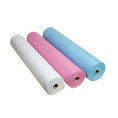
Hey there! As a supplier of Laminated Non Woven Fabric, I often get asked about the tear strength of this amazing material. So, let's dive right in and break it down.

First off, what exactly is tear strength? Well, tear strength is a measure of how much force is needed to tear a material. In the case of laminated non woven fabric, it's a crucial property because it determines how well the fabric can withstand stress and wear in various applications.
Laminated non woven fabric is made by bonding two or more layers of non woven material together. This lamination process not only adds strength but also enhances other properties like water resistance, durability, and printability. But when it comes to tear strength, several factors come into play.
One of the main factors affecting tear strength is the type of non woven material used. There are different types of non woven fabrics, such as spunbond, meltblown, and needle punched. Each type has its own unique characteristics and tear strength. For example, spunbond non woven fabrics are known for their high strength and durability, making them a popular choice for applications that require good tear resistance.
The lamination process itself also plays a significant role in determining tear strength. The quality of the adhesive used to bond the layers together, as well as the pressure and temperature applied during lamination, can all affect how well the layers stay together and how much force the fabric can withstand before tearing. A well - laminated fabric will have a stronger bond between the layers, resulting in higher tear strength.
Another important factor is the thickness of the fabric. Generally, thicker laminated non woven fabrics tend to have higher tear strength than thinner ones. This is because there is more material to resist the tearing force. However, it's not just about the overall thickness; the thickness distribution between the layers also matters. If one layer is significantly thinner than the others, it could become a weak point and reduce the overall tear strength of the fabric.
The orientation of the fibers in the non woven material can also impact tear strength. In some non woven fabrics, the fibers are randomly oriented, while in others, they may be more aligned in a particular direction. Fabrics with more aligned fibers may have higher tear strength in the direction of fiber alignment but lower tear strength in the perpendicular direction.
Now, let's talk about why tear strength is so important in different applications. In the packaging industry, for example, laminated non woven fabric is often used to make bags, pouches, and wraps. A high tear strength ensures that the packaging can protect the contents during handling, transportation, and storage. If the fabric tears easily, it could lead to damage to the product inside, which is a big no - no for both the manufacturer and the consumer.
In the automotive industry, laminated non woven fabric is used for interior components like seat covers, headliners, and door panels. These parts need to be able to withstand the wear and tear of daily use, including people getting in and out of the car, moving around, and rubbing against the fabric. Good tear strength ensures that these components last longer and maintain their appearance.
In the medical field, laminated non woven fabric is used for surgical gowns, drapes, and wound dressings. Tear strength is crucial here because any tear in the fabric could compromise the sterility of the environment or the effectiveness of the dressing. A strong fabric reduces the risk of contamination and provides better protection for both the patient and the medical staff.
So, how do we measure the tear strength of laminated non woven fabric? There are several standard test methods available. One common method is the Elmendorf tear test. In this test, a sample of the fabric is clamped in a special device, and a pendulum is used to tear the fabric. The energy required to tear the fabric is measured, and this value is used to calculate the tear strength.
Another method is the tongue tear test, where a sample of the fabric is cut in a specific shape and then pulled apart at a constant rate. The force required to tear the fabric is measured, and this gives an indication of the tear strength.
As a supplier, we take tear strength very seriously. We use high - quality non woven materials and state - of - the - art lamination processes to ensure that our Laminated Non Woven Fabric has excellent tear strength. We also conduct regular quality control checks using the standard test methods to make sure that our products meet or exceed the industry standards.
If you're in the market for laminated non woven fabric, tear strength should definitely be one of the key factors you consider. Whether you're in the packaging, automotive, medical, or any other industry, a fabric with high tear strength will save you a lot of headaches in the long run.
If you're interested in learning more about our laminated non woven fabric or have specific requirements regarding tear strength, don't hesitate to reach out. We're always happy to have a chat and see how we can meet your needs. Whether it's finding the right fabric for your application or customizing the tear strength to fit your exact requirements, we've got you covered.
References
- ASTM International standards for non - woven fabric testing
- Journal of Textile Science and Technology articles on laminated non woven materials