


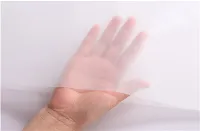


As a supplier of SMS non woven fabric, I've had extensive experience with this material. While SMS non woven fabric offers numerous advantages such as high strength, good barrier properties, and cost - effectiveness, it also has its fair share of disadvantages. In this blog, I'll delve into some of the drawbacks associated with SMS non woven fabric.
Environmental Impact
One of the most significant disadvantages of SMS non woven fabric is its environmental footprint. SMS non woven fabric is primarily made from polypropylene, a type of plastic. Plastic is notorious for its slow degradation rate. In a landfill, SMS non woven fabric can take hundreds of years to break down. This long - term persistence in the environment leads to an accumulation of waste. For example, disposable SMS non woven face masks, which have seen a surge in use during the COVID - 19 pandemic, are often discarded after single - use. These masks end up in landfills or, in some cases, litter the environment, posing a threat to wildlife. Birds may mistake small pieces of SMS non woven fabric for food, and marine animals can get entangled in larger pieces.
Moreover, the production of polypropylene, the main component of SMS non woven fabric, requires significant amounts of fossil fuels. The extraction and processing of these fossil fuels contribute to greenhouse gas emissions, further exacerbating climate change. This high energy consumption and environmental pollution associated with production make SMS non woven fabric less sustainable compared to some natural fiber - based alternatives.
Limited Durability in Certain Conditions
Although SMS non woven fabric is known for its strength, it has limitations in terms of durability under specific conditions. Exposure to high temperatures can cause the fabric to lose its integrity. Polypropylene, the base material of SMS non woven fabric, has a relatively low melting point. When exposed to temperatures above 160°C (320°F), the fabric can start to melt or deform. This makes it unsuitable for applications where high - temperature resistance is required, such as in some industrial processes or in proximity to open flames.
In addition, prolonged exposure to sunlight can also degrade SMS non woven fabric. Ultraviolet (UV) rays from the sun can break down the chemical bonds in the polypropylene fibers, causing the fabric to become brittle and lose its strength over time. This is a particular concern for outdoor applications. For instance, if used as a covering for agricultural fields or in outdoor furniture, the fabric may need to be replaced more frequently due to UV - induced degradation. However, for more UV - resistant options, you can explore Anti - UV Black PP Spunbond Non Woven Fabric For Anti - weed Agriculture, which is designed to better withstand sunlight.
Poor Absorbency
SMS non woven fabric is not very absorbent. The tightly - packed structure of the fabric and the hydrophobic nature of polypropylene prevent it from quickly absorbing and retaining liquids. This is a major drawback in applications where absorbency is crucial, such as in medical dressings or hygiene products. In medical settings, a non - absorbent dressing may not effectively soak up wound exudate, leading to a moist environment that can promote the growth of bacteria and delay the healing process.
In the hygiene product industry, like in diapers or feminine hygiene products, the low absorbency of SMS non woven fabric means that additional absorbent materials need to be incorporated. This can increase the complexity and cost of product manufacturing. Compared to natural fibers such as cotton, which have excellent absorbency properties, SMS non woven fabric falls short in this aspect.
Difficulty in Recycling
Recycling SMS non woven fabric is a challenging process. The fabric is often a composite material with multiple layers of different structures and sometimes contains additives. These factors make it difficult to separate and recycle the components effectively. The lack of a well - established recycling infrastructure for SMS non woven fabric also contributes to the problem.
In most recycling facilities, the focus is on more common plastics like PET (polyethylene terephthalate) and HDPE (high - density polyethylene). SMS non woven fabric, with its unique composition, is often not included in the standard recycling streams. As a result, a large portion of used SMS non woven fabric ends up in landfills instead of being recycled. This lack of recyclability further adds to its environmental disadvantage.
Allergic Reactions
Some individuals may experience allergic reactions to SMS non woven fabric. Although polypropylene is generally considered a relatively inert material, the additives and chemicals used in the manufacturing process of SMS non woven fabric can cause skin irritation or allergic responses in sensitive individuals. For example, the chemicals used for bonding the different layers of the fabric or for adding water - repellent properties may trigger an allergic reaction. In medical applications, where the fabric comes into direct contact with the skin, this can be a significant concern. Patients with sensitive skin may develop rashes, itching, or other allergic symptoms when using medical products made from SMS non woven fabric.
Cost - Benefit Considerations for Some Applications
While SMS non woven fabric is often cost - effective for many applications, in some cases, the cost - benefit ratio may not be favorable. For applications that require high - end performance or specialized properties, the cost of modifying SMS non woven fabric to meet these requirements can be relatively high. For example, if you need a flame - retardant SMS non woven fabric, additional chemicals need to be added during the manufacturing process. These flame - retardant additives increase the production cost, and the resulting Flame Retardant Non Woven Fabric may be significantly more expensive than standard SMS non woven fabric.


In addition, for applications where only a small amount of fabric is needed, the setup cost for manufacturing custom - made SMS non woven fabric can be a deterrent. The production process of SMS non woven fabric typically involves large - scale machinery, and setting up these machines for small - batch production can be inefficient and costly.
Limited Breathability
SMS non woven fabric has relatively poor breathability. The dense structure of the fabric restricts the flow of air, which can lead to discomfort in applications where breathability is important, such as in clothing or bedding. When used in clothing, especially for active wear or in hot climates, the lack of breathability can cause the wearer to feel sweaty and overheated. This can also lead to skin problems, as the trapped moisture against the skin can create a breeding ground for bacteria and fungi.
In bedding applications, poor breathability can make the sleep environment less comfortable, affecting the quality of sleep. Compared to natural fibers like cotton, which are highly breathable, SMS non woven fabric fails to provide the same level of comfort in terms of air circulation.
Conclusion
Despite its many advantages, SMS non woven fabric has several notable disadvantages. Its environmental impact, limited durability in certain conditions, poor absorbency, recycling challenges, potential for allergic reactions, cost - benefit issues, and limited breathability are all factors that need to be considered when choosing this material for an application. However, as a supplier, I understand that for many applications, these drawbacks can be mitigated or worked around. For example, if you need a more fire - resistant option, you can explore Flame Retardant Non Woven Fabric, and for applications where a different structure is required, SS Non Woven Fabric may be a better choice.
If you're considering using SMS non woven fabric for your project, I encourage you to contact me to discuss your specific needs. We can work together to find the best solution, taking into account both the advantages and disadvantages of the material. Whether you need a large - scale supply or a custom - made product, I'm here to assist you in making an informed decision.
References
- "Non - Woven Fabrics: Technology, Properties, and Applications" by S. K. Bajpai
- "Environmental Impact of Synthetic Fibers" in the Journal of Environmental Science and Technology
- "Polymer Science and Engineering" by Fred W. Billmeyer Jr.