


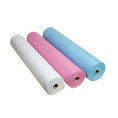


As a supplier of Blue PE Laminated Tissue Paper, I often encounter questions from customers regarding its properties, especially its resistance to oil. In this blog, I will delve into the science behind the oil - resistance of Blue PE Laminated Tissue Paper, share real - world applications, and discuss factors that can influence its performance.
The Science of Oil Resistance in Blue PE Laminated Tissue Paper
Blue PE Laminated Tissue Paper is composed of two main components: tissue paper and a layer of polyethylene (PE) film. Tissue paper is made from wood pulp fibers and is porous in nature. On its own, tissue paper is not resistant to oil as the oil can easily penetrate through the spaces between the fibers. However, the polyethylene layer changes the game.
Polyethylene is a thermoplastic polymer that has a non - polar molecular structure. Oil, which is also non - polar, has a natural tendency to interact with other non - polar substances. But the tightly packed molecular chains in the polyethylene layer create a physical barrier. When oil comes into contact with the Blue PE Laminated Tissue Paper, the PE layer prevents the oil from seeping through to the tissue paper beneath. This is based on the principle of molecular interaction and the impermeability of the polymer structure.
Real - World Applications
The oil - resistant property of Blue PE Laminated Tissue Paper makes it suitable for a wide range of applications.
In the food industry, it is commonly used for wrapping oily food items such as fried chicken, burgers, and pastries. The oil from these foods is effectively contained within the wrapper, preventing it from staining the outer packaging or the customer's hands. This not only enhances the overall customer experience but also maintains the hygiene and presentation of the food product.
Another application is in the automotive and machinery industries. Blue PE Laminated Tissue Paper can be used as a protective covering for parts that are lubricated with oil. It helps to prevent oil from dripping onto other components or surfaces, reducing the risk of contamination and corrosion.
In addition, it is also used in the art and craft sector. Artists may use it as a protective layer when working with oil - based paints or solvents, as it can prevent the oil from spreading and staining the work area.
Factors Influencing Oil Resistance
While Blue PE Laminated Tissue Paper generally has good oil - resistant properties, several factors can influence its performance.
The thickness of the PE layer is a crucial factor. A thicker PE layer provides a more robust barrier against oil penetration. If the PE layer is too thin, there may be microscopic holes or weak points through which oil can seep. Therefore, when manufacturing Blue PE Laminated Tissue Paper, it is important to ensure that the PE layer meets the required thickness standards for the intended application.
The quality of the polyethylene used also matters. High - quality polyethylene with a uniform molecular structure is more effective at preventing oil penetration than lower - quality alternatives. Impurities or inconsistencies in the PE can create weak spots in the barrier, reducing the overall oil - resistance of the paper.
The temperature and duration of contact with oil can also impact the performance. At higher temperatures, the molecular movement in the oil and the PE layer increases. This can cause the oil to penetrate the PE layer more easily over time. Similarly, prolonged contact with oil may also lead to some degree of oil absorption, although this is typically much slower compared to non - laminated tissue paper.
Comparison with Other Laminated Papers
When comparing Blue PE Laminated Tissue Paper with other types of laminated papers, such as Green PE Laminated Tissue Paper and Wood Pulp PE Laminated Paper, the oil - resistant properties are generally similar as they all have a polyethylene layer. However, the color of the paper (in the case of blue vs. green) is mainly for aesthetic or identification purposes and does not affect the oil - resistance.


Wood Pulp PE Laminated Paper may have a different base paper composition, which can influence its overall strength and flexibility, but the oil - resistant function is primarily determined by the PE layer. Another type, PE Laminated Paper For Dental Paper Scarf, is designed for specific dental applications and also relies on the oil - resistant properties of the PE layer to prevent the penetration of saliva and other fluids.
Conclusion
In conclusion, Blue PE Laminated Tissue Paper is indeed resistant to oil due to the physical barrier provided by the polyethylene layer. Its oil - resistant property makes it a versatile product with applications in various industries. However, factors such as the thickness and quality of the PE layer, as well as the temperature and duration of oil contact, can influence its performance.
If you are in need of high - quality Blue PE Laminated Tissue Paper for your business, we are here to provide you with the best products. We have a wide range of options to meet your specific requirements. Whether you are in the food, automotive, or any other industry, our Blue PE Laminated Tissue Paper can be a reliable solution. Feel free to contact us to discuss your procurement needs and start a business negotiation.
References
- Polymer Science: Principles and Applications, 2nd Edition. This book provides in - depth knowledge about the properties of polymers like polyethylene and their interaction with different substances.
- Handbook of Food Packaging Technology. It offers insights into the use of packaging materials, including oil - resistant papers, in the food industry.
- Industrial Applications of Laminated Papers. This resource details the various applications of laminated papers in different industrial sectors.