


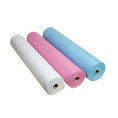


As a supplier of PE Film Laminated PP SMS, I've witnessed firsthand the growing demand for this versatile material across various industries. In this blog, I'll delve into the impact strength of PE Film Laminated PP SMS, exploring its significance, influencing factors, and practical applications.
Understanding PE Film Laminated PP SMS
PE Film Laminated PP SMS combines the properties of polyethylene (PE) film and polypropylene (PP) spunbond - meltblown - spunbond (SMS) non - woven fabric. The PE film is laminated onto the PP SMS, creating a composite material that offers a unique set of characteristics. The PP SMS provides a strong, porous base with good mechanical properties, while the PE film adds a layer of protection, enhancing the material's barrier properties, moisture resistance, and surface smoothness.
Significance of Impact Strength
Impact strength is a crucial property for any material, especially those used in applications where they may be subjected to sudden forces or impacts. In the case of PE Film Laminated PP SMS, high impact strength ensures that the material can withstand physical stress without tearing or breaking. This is particularly important in industries such as packaging, where products need to be protected during transportation and handling. A material with good impact strength can prevent damage to the contents, reducing losses and ensuring product quality.
Factors Influencing Impact Strength
1. Material Composition
The quality and type of PE film and PP SMS used in the lamination process have a significant impact on the overall impact strength. Higher - grade polymers generally offer better mechanical properties. For example, using a PE film with a higher density can increase the material's stiffness and resistance to impact. Similarly, the fiber fineness and structure of the PP SMS can affect its strength. Finer fibers often result in a more uniform and stronger non - woven fabric.
2. Lamination Process
The way the PE film is laminated onto the PP SMS also plays a vital role. A proper lamination process ensures good adhesion between the two layers, which is essential for transferring the impact force across the composite material. Factors such as temperature, pressure, and the use of adhesives (if any) during lamination can affect the bonding strength. If the lamination is not done correctly, delamination may occur under impact, reducing the material's overall strength.
3. Thickness
The thickness of both the PE film and the PP SMS layer can influence the impact strength. Generally, a thicker material can absorb more energy during an impact. However, increasing the thickness also has trade - offs, such as increased cost and reduced flexibility. Therefore, finding the optimal thickness for a specific application is crucial.
Testing Impact Strength
There are several standard methods for testing the impact strength of materials, such as the pendulum impact test and the falling dart impact test. In the pendulum impact test, a swinging pendulum strikes the sample, and the energy absorbed by the sample is measured. The falling dart impact test involves dropping a dart onto the sample from a specified height and determining the energy required to break the sample. These tests provide quantitative data on the material's impact resistance, allowing manufacturers to compare different materials and select the most suitable one for their applications.
Applications and Impact Strength Requirements
1. Packaging
In the packaging industry, PE Film Laminated PP SMS is widely used for packaging various products, including food, electronics, and medical supplies. For food packaging, the material needs to have sufficient impact strength to protect the food from damage during transportation. For example, when packaging fresh produce, the material should be able to withstand the jostling and impacts that occur during shipping without tearing. In the case of electronics packaging, the material must protect the delicate components from impacts, preventing damage to the products. You can learn more about PE film coated pp non woven for packaging applications.
2. Medical and Hygiene Products
In the medical and hygiene sector, PE Film Laminated PP SMS is used in products such as surgical gowns, masks, and diapers. Surgical gowns need to have good impact strength to resist tearing during medical procedures, ensuring the safety of both the patients and the medical staff. Diapers require a material that can withstand the movements of the baby without breaking, providing reliable protection against leaks. The Pe Film Laminated Nonwoven Fabric is often used in these applications due to its combination of impact strength and other desirable properties.


3. Agriculture
In agriculture, PE Film Laminated PP SMS can be used as a protective covering for crops. The material needs to withstand the impact of wind, rain, and hail. A high - impact - strength material can ensure that the covering remains intact, providing a stable environment for crop growth. It can also protect the crops from pests and diseases by acting as a physical barrier.
Improving Impact Strength
1. Additives
Adding certain additives to the PE film or PP SMS can improve the impact strength. For example, impact modifiers can be added to the PE film to enhance its toughness. These additives work by absorbing and dissipating the energy from an impact, preventing the material from breaking.
2. Reinforcement
In some cases, reinforcing the PE Film Laminated PP SMS with additional materials can increase its impact strength. For example, adding a layer of a stronger fabric or a mesh between the PE film and the PP SMS can provide extra support and distribute the impact force more evenly.
Conclusion
The impact strength of PE Film Laminated PP SMS is a complex property that is influenced by multiple factors, including material composition, lamination process, and thickness. Understanding these factors and how they interact is essential for producing a material with the desired impact strength for specific applications. As a supplier of PE Film Laminated PP SMS, I am committed to providing high - quality products that meet the diverse needs of our customers. Whether you are in the packaging, medical, or agricultural industry, our materials can offer the impact strength and other properties you require.
If you are interested in learning more about our PE Film Laminated PP SMS products or if you have specific requirements for your application, please feel free to contact us for procurement discussions. We look forward to working with you to find the best solutions for your business.
References
- ASTM International. Standard test methods for impact properties of plastics and electrical insulating materials.
- Plastics: Materials and Processing. Third Edition. By Donald R. Paul and Charles A. Han.