


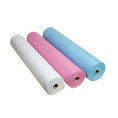


In the realm of geotextile applications, the soil - reinforcement ability of SS non woven fabric is a topic of great importance. As a reliable SS Non Woven Fabric supplier, I have witnessed firsthand the remarkable impact this material has on various engineering projects.
Understanding SS Non Woven Fabric
SS non woven fabric, also known as spun - bonded non woven fabric, is manufactured through a process where polymer fibers are extruded and then bonded together. This creates a fabric with a unique structure that offers several advantages in geotextile applications. It is lightweight, yet strong, and has excellent chemical resistance and durability.


The production process of SS non woven fabric involves melting polymer resin, such as polypropylene, and then extruding it through a spinneret to form continuous filaments. These filaments are then randomly laid on a moving conveyor belt and bonded together by heat, pressure, or chemical means. The resulting fabric has a uniform and stable structure, which is crucial for its performance in soil reinforcement.
Soil - Reinforcement Mechanisms of SS Non Woven Fabric
One of the primary ways SS non woven fabric reinforces soil is through the principle of interlocking. When the fabric is placed within the soil mass, the fibers of the non woven fabric interlock with the soil particles. This interlocking action restricts the movement of soil particles, thereby increasing the overall stability of the soil. For example, in a slope protection project, the SS non woven fabric can be installed on the slope surface. As the soil tries to move downwards due to gravity, the interlocking between the fabric and the soil particles resists this movement, preventing soil erosion and slope failure.
Another important mechanism is the distribution of stress. SS non woven fabric can distribute the applied loads over a larger area of the soil. In a road construction project, for instance, the traffic loads on the road surface are transferred to the underlying soil. The SS non woven fabric placed between the sub - base and the subgrade helps to spread these loads evenly, reducing the stress concentration on the soil. This not only improves the bearing capacity of the soil but also prolongs the service life of the road.
Moreover, SS non woven fabric can enhance the shear strength of the soil. The fabric acts as a reinforcement layer that can resist shear forces within the soil. When the soil is subjected to lateral forces, such as those during an earthquake or in a retaining wall system, the SS non woven fabric provides additional resistance, preventing the soil from sliding or deforming.
Case Studies of SS Non Woven Fabric in Geotextile Applications
Let's look at some real - world examples to better understand the soil - reinforcement ability of SS non woven fabric. In a coastal embankment project, the erosion of the soil due to wave action was a major concern. By installing SS non woven fabric on the embankment slope, the fabric interlocked with the soil particles and protected the soil from being washed away by the waves. Over time, the stability of the embankment improved significantly, and the risk of failure was reduced.
In a landfill liner system, SS non woven fabric is used as a protection layer between the geomembrane and the soil. The fabric not only provides cushioning to the geomembrane but also reinforces the soil around it. It helps to prevent the puncture of the geomembrane by sharp soil particles and distributes the pressure from the waste above, ensuring the integrity of the landfill liner system.
Advantages of Using SS Non Woven Fabric for Soil Reinforcement
One of the key advantages of SS non woven fabric is its cost - effectiveness. Compared to traditional soil - reinforcement methods, such as using concrete or steel, SS non woven fabric is relatively inexpensive. It requires less material and labor for installation, which can significantly reduce the overall project cost.
SS non woven fabric is also easy to install. It can be cut to the desired size and shape and laid on the soil surface quickly. This reduces the construction time and allows projects to be completed more efficiently.
In addition, SS non woven fabric is environmentally friendly. It is made from recyclable polymers, and its use can help to reduce the consumption of natural resources. Unlike some traditional construction materials, SS non woven fabric does not produce harmful emissions during its production or use.
Different Types of SS Non Woven Fabric for Soil Reinforcement
We offer a variety of SS non woven fabric products to meet different soil - reinforcement needs. Our Blue Color Disposable Non Woven is a popular choice for temporary soil - reinforcement applications. It has a high strength - to - weight ratio and is suitable for short - term projects, such as in construction sites where the soil needs to be stabilized during the building process.
For applications where fire safety is a concern, our Flame Retardant Non Woven Fabric is an ideal option. This fabric is treated with flame - retardant chemicals, which can prevent the spread of fire in case of an accident. It can be used in industrial sites or areas with high fire risks, such as near power plants or chemical factories.
Our Textiles Hot Selling Spun Bond Non - woven Fabric is known for its excellent mechanical properties and durability. It is widely used in large - scale infrastructure projects, such as highways and railways, where long - term soil reinforcement is required.
Factors Affecting the Soil - Reinforcement Ability of SS Non Woven Fabric
Several factors can affect the soil - reinforcement ability of SS non woven fabric. The first is the fabric's strength and stiffness. A stronger and stiffer SS non woven fabric can provide better reinforcement. The tensile strength of the fabric is an important parameter. Higher tensile strength means the fabric can withstand greater forces without breaking, ensuring more effective soil reinforcement.
The weight per unit area of the fabric also plays a role. Generally, a heavier fabric has better soil - reinforcement performance. However, the choice of fabric weight should be based on the specific requirements of the project. For example, in a project with limited soil cover, a lighter weight fabric may be more appropriate to avoid excessive stress on the soil.
The soil properties themselves are also crucial. The type of soil, its particle size distribution, and moisture content can all affect the interaction between the SS non woven fabric and the soil. In cohesive soils, the bonding between the fabric and the soil may be different compared to granular soils. Therefore, a detailed understanding of the soil properties is necessary to select the most suitable SS non woven fabric for soil reinforcement.
Conclusion and Call to Action
In conclusion, SS non woven fabric has significant soil - reinforcement ability in geotextile applications. Its unique structure and properties allow it to interlock with soil particles, distribute stress, and enhance the shear strength of the soil. Whether it is for slope protection, road construction, or landfill liner systems, SS non woven fabric can provide cost - effective, easy - to - install, and environmentally friendly solutions.
As a leading SS Non Woven Fabric supplier, we are committed to providing high - quality products that meet the diverse needs of our customers. If you are involved in a project that requires soil reinforcement, we invite you to contact us for a detailed discussion. Our experienced team can help you select the most appropriate SS non woven fabric for your project and provide technical support throughout the process. Let's work together to achieve successful and sustainable soil - reinforcement solutions.
References
- Koerner, R. M. (2012). Designing with Geosynthetics. Pearson.
- Giroud, J. P., & Bonaparte, R. (1989). Design and construction of geotextile - reinforced unpaved roads. Journal of Geotechnical Engineering, 115(1), 47 - 63.
- Shin, E. - C., & Kim, D. - H. (2008). Behavior of geotextile - reinforced soil slopes. Geotextiles and Geomembranes, 26(4), 291 - 302.