


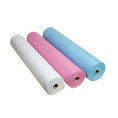

PP Non Woven Fabric
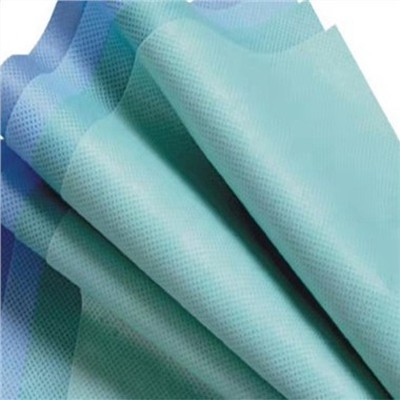
Zibo Dekun Non Woven Fabric Co.,Ltd. was founded in 2015, is located in Zhoucun District of Zibo City known as "the first village in the world", is a research and development, production, sales and service in one of the non woven fabric, laminated non woven fabric professional manufacturers, the company plant area of 15000m², existing employees of 120 people.The main products are hydrophilic, water repellent, flame retardant, anti-aging, anti-static, ultra-soft and electrostatic adsorption and other types, and widely used in medical, health, agriculture, packaging, construction, furniture and other fields, according to customer requirements for anti-microbial, three antibodies and ultra-soft treatment.





Why Choose Us
Strong Production Capacity
We have 9 non-woven fabric production lines, 4 coated non-woven fabric production lines and 2 composite production lines. It can produce 9g-200g/m2 of high quality PP spunbonded non-woven fabric, including SS, SSS, SMS, SMMS, SSMMS as well as melt-blown non-woven fabrics and laminated non woven fabric. The width can be adjusted between 10cm-320cm, and the annual output can reach 50,000 tons.
Complete Qualifications
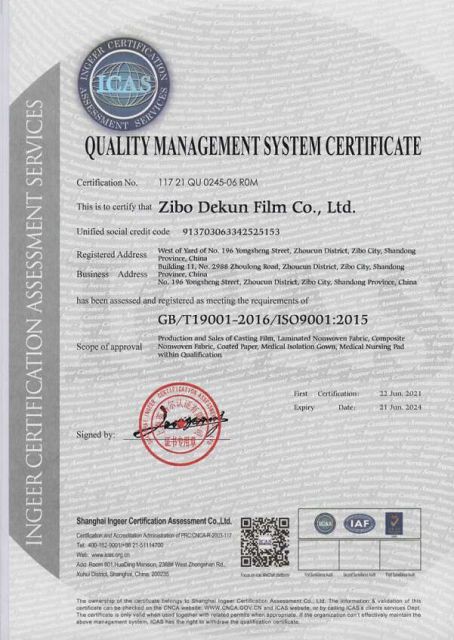
Our company has independent import and export qualifications, has passed ISO9001 quality system certification, ISO13485 medical device quality management system certification and EN13795, applied for more than 10 patents, and the products have been certified by many authoritative organizations - Food and Drug Administration, SGS, Soochow University and GTTC Group. With excellent product performance and reliable quality, the products have won the support and trust of customers at home and abroad.
Full Service
We can customize various functional non-woven fabrics according to customer needs to meet customers' unique and different needs. After 20 years of continuous innovation and development, excellent technology and production equipment, and a perfect quality control system, we guarantee the best price and quality of non-woven fabrics.
Production Market
Since 2019, the marketing revenue of the company has exceeded 100 million yuan for three consecutive years, and the export of products accounts for 60%. The products are exported to the United States, Germany, France, Japan, and Russia, South America, Middle East and other countries and regions.
Advantages of PP Non Woven Fabric
Lightweight and Easy to Handle
One of the primary advantages of PP nonwoven fabric is its lightweight nature. This makes it easy to handle and transport, especially in large quantities. Additionally, it is easy to cut and sew, making it ideal for custom applications.
Strength and Durability
While PP nonwoven fabric is lightweight, it is also incredibly strong and durable. It can withstand harsh environmental conditions, including extreme temperatures, UV radiation, and moisture. This makes it suitable for a variety of outdoor applications, such as agricultural covers and construction materials.
Water and Chemical Resistance
Another significant advantage of PP nonwoven fabric is its resistance to water and chemicals. It does not absorb moisture, making it ideal for use in medical and hygiene products. Additionally, it is resistant to most chemicals, making it suitable for use in industrial applications.
Breathability
PP non woven fabric has excellent breath ability, allowing air to flow through the material. This makes it ideal for use in medical and hygiene products such as surgical gowns, face masks, and diapers.
Eco-friendly
PP non woven fabric is a sustainable material that can be recycled and reused. It is also biodegradable, making it an eco-friendly alternative to traditional synthetic materials.
Versatility
PP nonwoven fabric can be customized to meet the needs of various applications. It can be produced in different colors, thicknesses, and textures, making it suitable for use in a wide range of industries, including agriculture, construction, healthcare, and hygiene.
|
Product Name |
PP Non Woven Fabric |
|
Composition |
100%polypropylene |
|
Technology |
Spunbond |
|
Size |
As your requirement |
|
Weight |
9gsm-260gsm |
|
Width |
10cm-320cm |
|
Color |
As customer request |
|
Optional Treatment |
Surface texture: Embossed, Smooth, Frosted, Etc. |
|
Special treatment: Waterproof, Oil-proof, anti-static, Etc. |
|
|
Additives: Antibacterial agent, Anti-ultraviolet agent, Flame retardant, Etc. |
|
|
Printing: Patterns, Logos or texts |
|
|
Sample time |
3-5days |
|
Delivery time |
15 days after receiving the deposit |
|
Packaging |
Packed in rolls,with 2" or 3"ID core inside, poly bags outside, loaded by 20GP or 40 HC |
Application of PP Non Woven Fabric
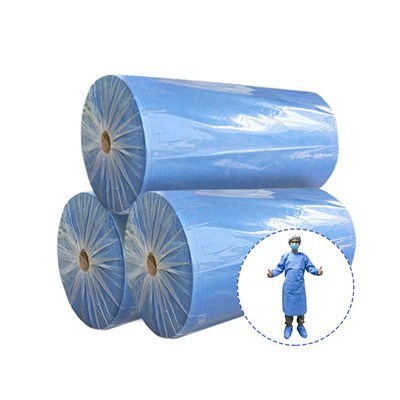
Healthcare: PP non woven fabric is extensively used in the healthcare industry to produce surgical masks, gowns, drapes, and other disposable medical products. Its lightweight, breathable, and moisture-resistant properties make it ideal for maintaining hygiene and comfort in medical settings.
Agriculture:
In agriculture, PP non woven fabric is used to create crop covers, weed control fabrics, and seedling protection products. The fabric helps to protect crops from pests and weather while allowing air and moisture to pass through.
Packaging:
PP non woven fabric is also used in packaging, particularly for reusable shopping bags, protective covers, and other products that require durability and moisture resistance.
Automotive:
The automotive industry uses PP non woven fabric in applications such as car interiors, insulation, and filtration. The fabric’s durability and chemical resistance make it a reliable choice for these demanding environments.
Construction:
PP non-woven fabric is commonly used in construction for applications such as geotextiles, roofing underlayments, and insulation. The fabric’s strength and resistance to moisture and chemicals make it suitable for use in harsh conditions.
Types of PP Non Woven Fabric
Spunbond Nonwoven Fabric:
This is a lightweight, strong, and soft fabric made by bonding polypropylene fibers using heat and pressure. Spunbond nonwoven fabric is commonly used in medical and hygiene products, as well as in agriculture, construction, and automotive industries.
Meltblown Nonwoven Fabric:
This is a fine and dense fabric made by melting and blowing polypropylene fibers at high temperatures. Meltblown nonwoven fabric has excellent filtration properties, making it suitable for use in face masks, air filters, and other filtration applications.
SMS Nonwoven Fabric:
This is a composite fabric made by combining spunbond and meltblown nonwoven fabrics. SMS nonwoven fabric is strong, durable, and has excellent barrier properties against liquids and airborne particles. It is commonly used in medical and hygiene products, as well as in protective clothing and packaging materials.
Needle-punched Nonwoven Fabric:
This is a nonwoven fabric made by mechanically interlocking fibers using needles. Needle-punched nonwoven fabric has good insulation and soundproofing properties, making it suitable for use in home textiles, furniture, and automotive applications.
Stitch-bonded Nonwoven Fabric:
This is a nonwoven fabric made by mechanically bonding fibers together using stitching techniques. Stitch-bonded nonwoven fabric is strong, durable, and has good drapability, making it suitable for use in home textiles, clothing, and upholstery.


Step 1: Polymer Melting
The process of making PP spunbond nonwovens begins with the melting of the polymer. The polymer is melted in an extruder and then extruded through a spinneret.
Step 2: Filament Extrusion
The extruded polymer is then forced through fine nozzles to create continuous filaments. The filaments are cooled and solidified as they exit the spinneret.
Step 3: Filament Laying
The filaments are laid down in a random pattern onto a moving conveyor belt. The conveyor belt moves at a controlled speed to ensure that the filaments are laid down evenly.
Step 4: Bonding
The web is then bonded together by thermal, chemical, or mechanical means. Thermal bonding involves heating the web to a temperature that causes the fibers to bond together. Chemical bonding involves applying a chemical binder to the web that causes the fibers to bond together. Mechanical bonding involves using needles or other mechanical means to physically bond the fibers together.
Step 5: Finishing
The finished PP spunbond non woven fabric is then rolled onto a spool or cut into sheets for further processing.
Packaging and Logistics
Logistics
In most cases, nonwoven products are suitable for shipping by sea due to their large size. This method is suitable for large-volume, long-distance international transportation. Air transportation can also be selected. This method is suitable for urgent orders or small-volume orders. The transportation cost is high and the transportation speed is fast. If the distance is not very far, it can also be transported by train.
We also have express delivery, which is more suitable for sample orders. Our commonly used express companies such as DHL, FedEx, UPS, etc. provide door-to-door service.
Packaging method
Our most common packaging method is roll packaging. PP Spunbond Nonwoven Fabric is rolled into rolls and then wrapped with plastic film to prevent dust and moisture.
For the inner packaging, we will use transparent plastic film or kraft paper for inner packaging.
For the outer packaging, we will use plastic woven bags or cartons for outer packaging, and put labels on the outer packaging to indicate product specifications, quantity, weight and other information.
Finally, in order to facilitate loading and unloading and transportation, the rolled non-woven fabrics will be stacked on pallets, often using standard wooden or plastic pallets, and then fixed with stretch film or strapping tape. Each package needs to be labeled with the product model, specifications, quantity, production date, batch number and other information for inspection and acceptance.
According to different needs and transportation conditions, the delivery and packaging methods can be flexibly adjusted to ensure that the product arrives safely in your hands.


Our Certificates

FAQ
We're well-known as one of the leading pp spunbonded non woven fabric manufacturers and suppliers in China. Please feel free to buy customized pp spunbonded non woven fabric at competitive price from our factory. Good service and quality products are available.